What if you could perform a non-invasive biopsy on your engine to see exactly how it's wearing from the inside out? For many owners, the uncertainty of internal engine health is a constant source of concern, particularly when evaluating a pre-owned vehicle or questioning the adequacy of standard service intervals. You likely realize that a visual inspection cannot reveal the microscopic particles shed by rod bearings or timing chains before a failure occurs. This is where a specialized bmw engine oil analysis becomes an essential tool for the discerning owner.
We agree that maintaining a high-performance machine requires more than just guesswork. This guide will demonstrate how laboratory-grade oil testing acts as a diagnostic blood test, identifying internal wear patterns before they lead to expensive repairs. You'll discover how specialized, dealer trained technicians interpret these complex reports to validate engine integrity. We will also preview how this data provides a clear roadmap for maintenance, offering the professional certainty you need to enjoy your vehicle with complete confidence in its long-term reliability.
Key Takeaways
- Learn how a laboratory evaluation of motor oil reveals the chemical signature of internal components to detect microscopic wear before it becomes visible.
- Identify early indicators of rod bearing wear and fuel dilution to prevent catastrophic failures in high-revving BMW performance engines.
- Discover the methodical process used for bmw engine oil analysis to ensure a clean, mid-stream sample for accurate spectrochemical results.
- Understand the critical role of dealer trained technicians in interpreting complex laboratory data to provide actionable maintenance advice.
- Utilize professional oil testing as a definitive validation tool during pre-purchase inspections to confirm the internal health of a used luxury vehicle.
What is BMW Engine Oil Analysis and How Does It Work?
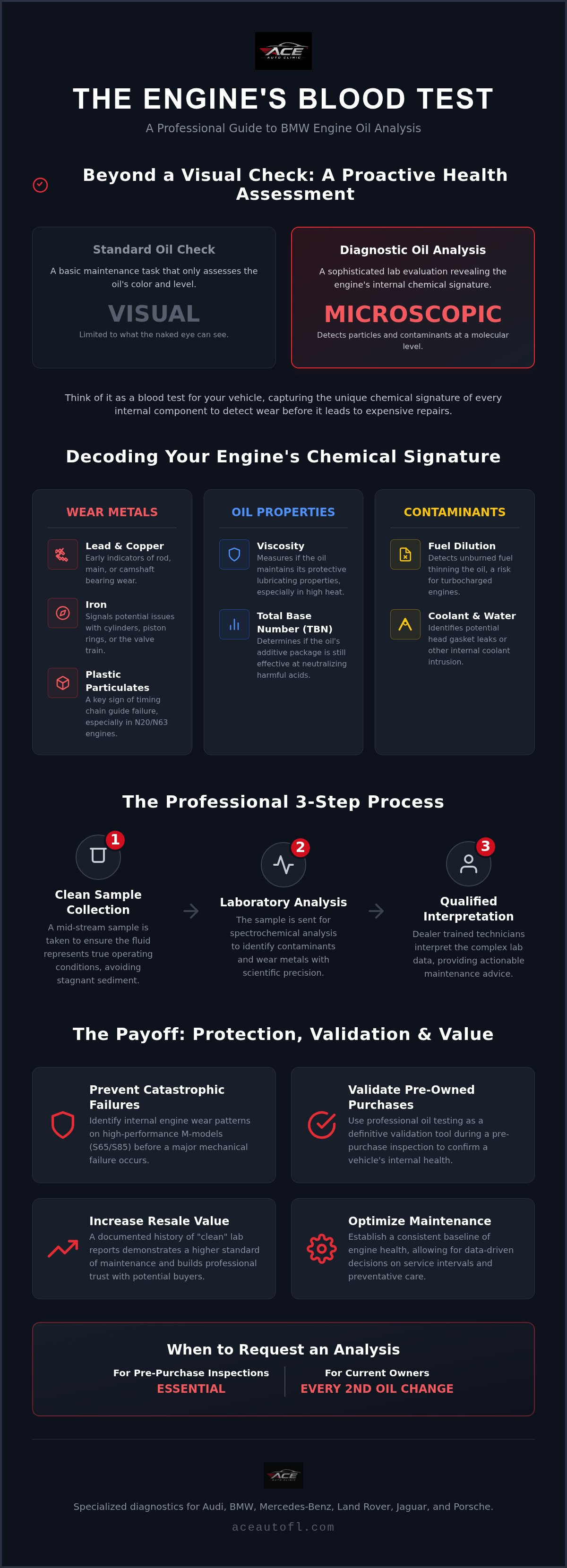
A specialized bmw engine oil analysis is a sophisticated laboratory evaluation of used motor oil designed to identify microscopic wear metals and chemical contaminants. While a standard visual inspection only looks at the oil's color or level, this diagnostic process reveals what's happening deep within the engine's internal architecture. You can think of it as a blood test for your vehicle. Just as a medical professional uses blood samples to detect early signs of illness, qualified technicians use oil samples to capture the chemical signature of every internal component, from rod bearings to camshafts.
European engines, particularly those from Audi, BMW, and Porsche, operate with significantly tighter tolerances and higher thermal loads than many domestic vehicles. This complexity requires a level of precision that standard maintenance cannot always provide. Understanding What is Oil Analysis allows owners to move beyond reactive repairs. A standard oil change is a maintenance task; a diagnostic oil analysis is a proactive health assessment that provides data points a technician simply cannot see with the naked eye.
The Science of Fluid Diagnostics
The process involves spectrochemical analysis to identify specific elements suspended in the fluid. For example, elevated levels of lead or copper often indicate wear on the engine's main bearings, while iron typically signals issues with the cylinders or valve train. Beyond wear metals, the laboratory measures viscosity and the Total Base Number (TBN). These metrics determine if the oil's additive package is still effectively neutralizing acids and protecting your engine's high-stress surfaces.
When to Request an Oil Analysis
We recommend performing this test during a pre-purchase inspection for any used BMW to validate the engine's internal condition before you commit to the sale. For current owners, requesting an analysis at every second oil change is a sound strategy. This establishes a consistent baseline of engine health, making it much easier to spot abnormal trends or sudden spikes in wear metals that suggest an emerging mechanical problem.
Critical Benefits of Oil Testing for Performance BMW Engines
For owners of high-revving M models, a specialized bmw engine oil analysis offers a level of protection that internal sensors alone cannot provide. High-performance S-series engines, such as the S65 V8 or S85 V10, are known for specific rod bearing wear patterns. Because these bearings are composed of layered metals, a laboratory report can detect elevated levels of lead or copper before a catastrophic mechanical failure occurs. This proactive data allows you to address internal wear during a scheduled service rather than facing an emergency engine replacement.
Modern turbocharged BMW engines also face the risk of fuel dilution. When unburned fuel enters the crankcase, it thins the engine oil and significantly reduces its lubricating properties. This often leads to premature turbocharger bearing failure. By monitoring the fuel percentage in the oil, qualified technicians can identify leaking fuel injectors or inefficient combustion cycles early. Research into the Critical Benefits of Oil Testing suggests that data-driven monitoring can also optimize oil change intervals, ensuring you don't discard healthy oil while preventing the use of degraded fluid.
Protecting Your BMW Investment
A documented history of oil analysis creates a transparent record of engine health that significantly increases the resale value of any luxury vehicle. Whether you own an Audi, BMW, or Mercedes-Benz, providing a prospective buyer with a "clean bill of health" from a laboratory establishes professional trust. It demonstrates that you've maintained the vehicle to a higher standard than the basic manufacturer recommendations. If you're considering a pre-owned purchase, you can schedule a consultation to discuss how testing can safeguard your investment.
Specific BMW Engine Vulnerabilities
Certain engine families, such as the N20 and N63, require specialized monitoring for timing chain guide wear. Analysis can detect microscopic plastic particulates or specific metal shavings that signal the guide is beginning to fail. Additionally, Florida's high operating temperatures can lead to rapid oil oxidation. Regular testing ensures the oil's viscosity remains within the required BMW Longlife specifications, preventing the sludge buildup that often triggers a Malfunction Indicator Light (MIL).
The Professional Oil Sampling and Interpretation Process
Obtaining accurate data requires a methodical collection technique. During your scheduled BMW service, specialized technicians at Ace Auto Clinic perform a mid-stream sample collection. This ensures the fluid represents the actual operating condition of the engine rather than capturing stagnant debris or sediment from the bottom of the oil pan. This sample is then sent to a laboratory for spectrochemical analysis to identify wear metals at the molecular level.
The scientific foundation of The Professional Oil Sampling and Interpretation Process involves complex methods like Ferrography and Fourier Transform Infrared Analysis. While the laboratory provides the raw data, the true value lies in the interpretation. A lab technician might see a number, but our dealer trained technicians understand how that number relates to the specific tolerances of a BMW N55 or B58 engine. This professional context is why a specialized bmw engine oil analysis is superior to a generic test kit, as it allows us to build a personalized maintenance plan tailored to your vehicle's unique wear profile.
Interpreting the Laboratory Report
Reports measure wear metals in Parts Per Million (PPM). A spike in certain elements can signal a failing component, but these numbers must be compared against a baseline of similar engine families. We also analyze insolubles, which are solid particles that haven't dissolved in the oil. High levels of insolubles often indicate that your oil filter is bypassed or that the air intake system is allowing silicon to enter the combustion chamber.
Actionable Maintenance in Clearwater
We don't just hand you a report; we turn it into a strategy. Based on the bmw engine oil analysis, we recommend specific vehicle maintenance packages that address your engine's current needs. This might include more frequent oil changes for a vehicle used in heavy Clearwater traffic or a specific cooling system service if we detect trace amounts of glycol. Scheduling follow-up tests allows us to monitor the success of these interventions over time.
Securing Engine Longevity through Professional Diagnostics
Utilizing laboratory-grade diagnostics is the most effective method for monitoring the internal condition of a high-performance engine. By identifying microscopic wear metals and chemical contaminants, you gain a level of insight that standard visual inspections simply cannot provide. It's a proactive strategy that protects critical internal components before a failure occurs. This data-driven approach is essential for maintaining the precision and reliability expected from your vehicle, ensuring it remains in peak operating condition for years to come.
Since 1989, Ace Auto Clinic has served the Clearwater community as a trusted partner for specialized European luxury vehicle care. Our qualified, dealer trained technicians utilize bmw engine oil analysis to interpret complex reports and provide clear, actionable maintenance strategies. This professional oversight ensures your vehicle continues to perform at its peak while safeguarding your long-term investment. We provide the technical proficiency and meticulous attention to detail required to keep your Audi, BMW, or Mercedes-Benz in optimal health.
Take the guesswork out of your maintenance routine and enjoy the peace of mind that comes with professional engine health monitoring. We're ready to help you maintain the reliability and performance of your luxury asset with specialized care and established expertise.
Frequently Asked Questions
How often should I have my BMW engine oil analyzed?
You should ideally perform a bmw engine oil analysis every second oil change or approximately every 10,000 miles to establish a consistent baseline. For high-performance M models or vehicles used in extreme climates like Florida, more frequent testing every 5,000 miles is advisable. Consistent sampling allows qualified technicians to identify emerging wear trends before they result in significant mechanical failure.
Can oil analysis detect a failing BMW water pump or cooling system?
Yes, oil testing can identify internal coolant leaks that signal a failing water pump or head gasket. The presence of sodium, potassium, or glycol in the laboratory report indicates that coolant is entering the lubrication system. Identifying these elements early prevents the formation of engine sludge and protects sensitive components from the corrosive effects of contaminated oil.
Is oil testing necessary if I follow the BMW Condition Based Service (CBS) intervals?
While the CBS system is a helpful tool, it relies on mathematical algorithms and driving patterns rather than the actual chemical condition of the fluid. A specialized bmw engine oil analysis provides a definitive assessment of the oil's remaining life and the engine's internal health. This empirical data is particularly valuable if you intend to keep your vehicle beyond the manufacturer's warranty period.
How much oil is needed for a specialized laboratory sample?
A standard laboratory sample requires approximately 3 to 4 ounces of used motor oil. Our dealer trained technicians collect this sample mid-stream during a routine oil change to ensure the fluid is representative of the entire system. This small volume is sufficient for a comprehensive spectrochemical analysis and the measurement of critical physical properties like viscosity and oxidation.
Does a 'clean' oil report mean my engine is in perfect condition?
A clean report indicates that the lubricated internal components are wearing within normal parameters, but it does not account for non-lubricated parts. Components such as belts, hoses, or external accessories are not monitored through this process. However, a series of healthy reports is a strong indicator of a well-maintained engine and provides professional certainty regarding the integrity of the rotating assembly.
Can oil analysis help diagnose a BMW electrical repair issue?
Oil testing is designed to monitor mechanical wear and fluid chemistry rather than electrical systems. While it cannot directly diagnose a BMW electrical repair issue, it can identify mechanical failures caused by faulty sensors. For example, a failing coolant temperature sensor might lead to engine overheating, which would eventually manifest as thermal degradation in the oil analysis report.
Disclaimer
Disclaimer: This article is provided by ACE Auto Clinic for general educational and informational purposes only. It is not intended to diagnose a vehicle, recommend a specific repair, replace a professional inspection, or serve as a substitute for the manufacturer’s service information.
Vehicle designs, specifications, maintenance requirements, symptoms, and repair procedures vary by year, make, model, equipment, modifications, operating conditions, and vehicle history. Information may also change as manufacturers release updated procedures and technical guidance. Do not make maintenance, repair, safety, or purchasing decisions based solely on this article.
Some content may be prepared using artificial-intelligence-assisted tools and may contain errors, omissions, or outdated information. ACE Auto Clinic makes reasonable efforts to provide useful information but does not guarantee that all content is complete, accurate, current, or applicable to every vehicle.
Always consult your vehicle’s owner’s manual and have the vehicle inspected by a qualified automotive professional before authorizing repairs or attempting service. ACE Auto Clinic is not responsible for damages, losses, injuries, repair costs, or other consequences resulting from reliance on or misuse of this information, to the fullest extent permitted by law.
References to vehicle manufacturers, product names, trademarks, and service procedures are for identification and educational purposes only and do not imply sponsorship, endorsement, or affiliation unless expressly stated.