What if the longevity of your Turbocharged Direct Injection engine depended less on how you drive and more on the specific chemical composition of your engine oil? Owning a VW Diesel is a commitment to efficiency, yet finding a facility that understands the nuances of high-pressure common rail systems can be a challenge for many owners in Clearwater. It's common to feel uncertain about which technical standards actually protect your investment over the long term.
This guide outlines the essential technical protocols required to maintain your TDI system, from adhering to strict VW 507.00 oil standards to protecting sensitive fuel components. You'll discover how proactive care from specialized, dealer trained technicians can reduce long term ownership costs while ensuring your vehicle remains a reliable asset. We'll preview the critical maintenance cycles and diagnostic precision that keep these sophisticated European engines performing at their peak potential.
Key Takeaways
- Understand how high pressure fuel delivery and specialized turbochargers maximize the thermal efficiency and torque output of your engine.
- Learn why adhering to strict Volkswagen oil standards and regular fuel filter changes are necessary for protecting sensitive internal components.
- Discover how specialized diagnostic tools allow qualified technicians to precisely interpret Malfunction Indicator Light codes in your VW Diesel.
- Gain confidence in choosing an independent repair facility in Clearwater that utilizes dealer trained technicians to lower long term ownership costs.
The Mechanics of the Volkswagen Turbocharged Direct Injection System
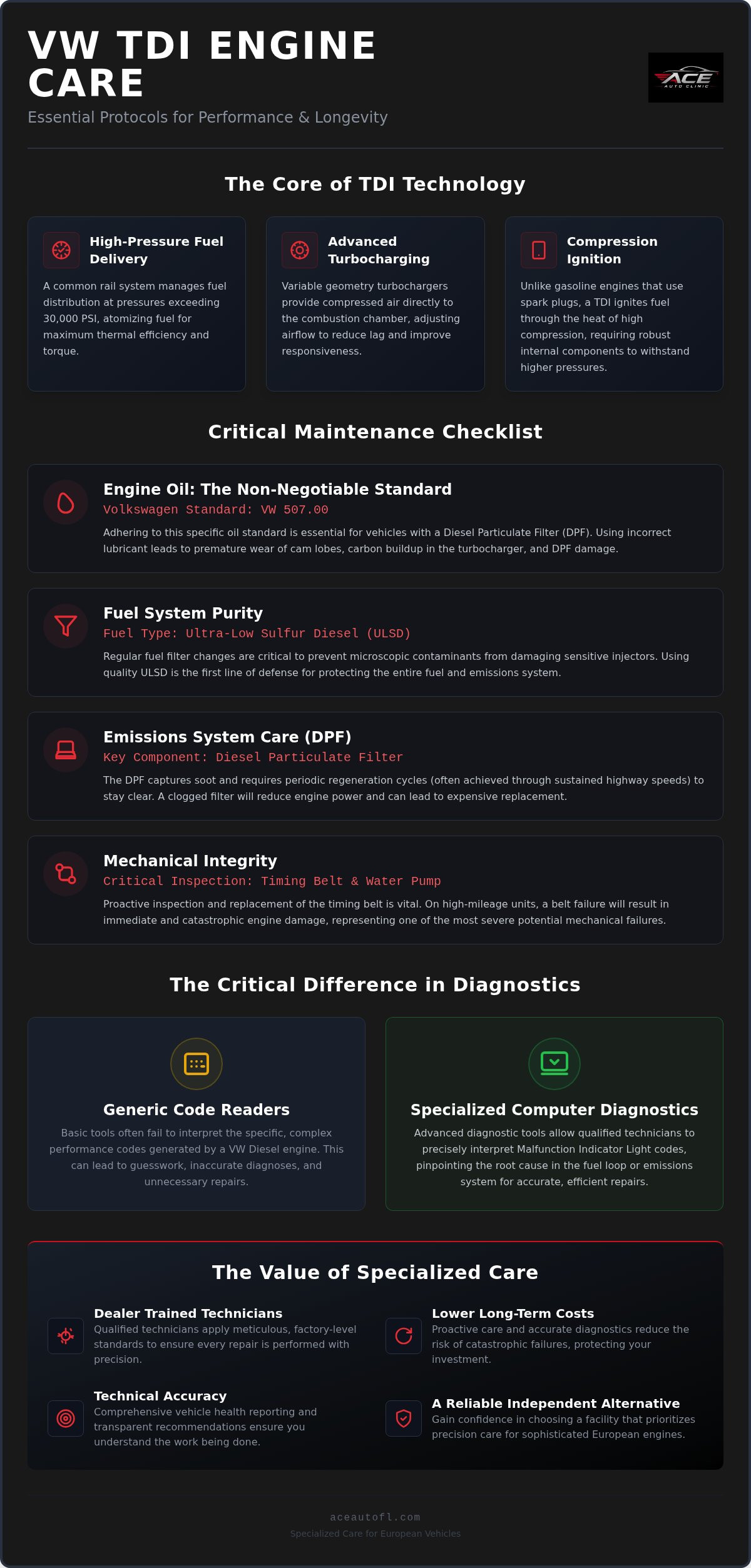
The Volkswagen Turbocharged Direct Injection System represents a sophisticated approach to internal combustion that prioritizes thermal efficiency. Unlike traditional engines, a VW Diesel relies on high pressure fuel delivery to optimize torque output across a broad power band. This system utilizes a specialized turbocharger to provide compressed air directly to the combustion chamber, which significantly increases the oxygen available for combustion. Achieving this level of performance requires precise timing and synchronization between mechanical components and electronic control modules. Our dealer trained technicians apply the same meticulous standards here as they do for Audi or BMW systems, knowing that minor deviations can lead to efficiency losses.
Success in maintaining these vehicles involves monitoring several critical systems:
- High Pressure Common Rail: Manages fuel distribution at pressures often exceeding 30,000 PSI.
- Variable Geometry Turbochargers: Adjusts airflow to reduce lag and improve responsiveness.
- Electronic Control Units: Orchestrates the precise moment of fuel injection for maximum efficiency.
How TDI Technology Differs from Standard Gasoline Engines
The primary distinction lies in the compression ignition process. While gasoline engines use spark plugs, a VW Diesel ignites fuel through the heat generated by high compression ratios. This process necessitates robust engine internal components, including reinforced pistons and connecting rods, to withstand significantly higher operating pressures. Central to this operation is the high pressure fuel pump, which must maintain consistent performance to feed the injectors. Because these systems are so tightly integrated, specialized diagnostics are essential for identifying sensor inaccuracies within the TDI loop. Qualified technicians can pinpoint whether a performance drop stems from a mechanical fuel delivery issue or an electronic sensor failure, ensuring accurate repairs through methodical problem solving. This specialized approach provides a reliable independent alternative for owners who prioritize technical accuracy.
Key Maintenance Protocols for TDI Performance and Reliability
Maintaining a VW Diesel requires a technical approach that goes beyond basic fluid changes. Adhering to specific Volkswagen oil standards, such as VW 507.00 for models with a Diesel Particulate Filter, is essential for protecting internal engine surfaces and turbocharger bearings. Using the wrong lubricant can lead to premature wear of cam lobes or carbon buildup in the turbocharger. Proactive inspection of the timing belt and water pump is equally critical. In high mileage units, a belt failure results in immediate and catastrophic engine damage. We recommend including these checks in regular maintenance packages to ensure long term vehicle value.
The fuel system is the heart of TDI reliability. Regular filter replacements prevent microscopic contaminants from reaching sensitive injectors that operate at extreme pressures. Our dealer trained technicians prioritize these intervals to prevent the high costs associated with fuel system contamination.
Managing Fuel Systems and Emission Components
Quality fuel is the first line of defense. Modern VW Diesel engines require Ultra-Low Sulfur Diesel to prevent damage to the Diesel Particulate Filter. This component captures soot and requires proper regeneration cycles, often achieved through sustained highway speeds, to remain clear. If a filter becomes clogged, it leads to reduced power or expensive replacements. Utilizing oil and fluid testing allows our team to identify early signs of internal wear or fuel dilution before they escalate. For those seeking Specialized Diagnostic and Repair Services, understanding these foundational engine principles is key to longevity. If you have questions about your service schedule, contact our specialized team for guidance.
Specialized Diagnostic and Repair Services for VW Diesel Models
Modern Turbocharged Direct Injection (TDI) systems are governed by intricate electronic control units. When a Malfunction Indicator Light appears, it requires more than a generic code reader to identify the root cause. A VW Diesel engine generates specific performance codes that demand specialized computer diagnostics to interpret accurately. Our facility in Clearwater provides a reliable independent alternative to dealership service, ensuring that technical accuracy remains the primary focus. This specialized care includes detailed reporting on vehicle health and transparent recommendations for any necessary repairs.
Quality Care and Precision Testing for TDI Owners
We utilize advanced engine and electrical diagnostics to pinpoint issues within the high pressure fuel loop or emissions system quickly. This methodical approach allows our dealer trained technicians to perform comprehensive engine service and repair that aligns with manufacturer specifications. As European auto repair specialists, we ensure that every fluid and component used meets the strict standards required for longevity. We understand that Florida's climate and driving conditions can place unique stresses on cooling systems and sensors.
Detailed reporting is a cornerstone of our professional service. We provide clear, information dense summaries of our findings, allowing owners to make informed decisions about their vehicle's maintenance. Properly maintained diesel vehicles don't just offer superior fuel economy for Florida commuters; they also retain a significantly higher resale value in the secondary market. By choosing a specialized facility that understands the nuances of the TDI platform, you protect your investment while ensuring your vehicle remains a reliable asset for years to come.
Securing the Future of Your Volkswagen Diesel Performance
Maintaining a Volkswagen diesel requires a disciplined approach to technical protocols. By prioritizing precise diagnostics and adhering to manufacturer specified oil standards, you ensure your Turbocharged Direct Injection system remains efficient. Our family owned facility has served the Clearwater community since 1989, offering a sophisticated alternative to dealership service for owners of Audi, BMW, and other European vehicles. Our dealer trained technicians utilize professional diagnostic equipment to identify early signs of wear, so you'll avoid the high costs of reactive repairs. This technical focus provides the security and reliability you expect from a high performance engine.
We look forward to helping you maintain the exceptional torque and efficiency of your vehicle for many years to come.
Frequently Asked Questions
How often should I change the fuel filter on my VW Diesel?
Most Volkswagen maintenance schedules recommend changing the fuel filter every 20,000 miles. In our humid Clearwater climate, moisture can accumulate within the fuel system, making this interval critical for protecting high pressure injectors. Our qualified technicians perform this service as part of our maintenance packages to ensure contaminants don't reach the combustion chamber, preserving the long term reliability of your VW Diesel.
What is the most common reason for a check engine light on a TDI model?
The most common reasons for a Malfunction Indicator Light on these models involve the emissions system, specifically the Diesel Particulate Filter or glow plug circuit failures. Because these systems are highly integrated, our Clearwater facility uses precise diagnostic equipment to interpret specific performance codes. This methodical approach identifies whether the issue is a minor sensor inaccuracy or a component requiring specialized mechanical repair.
Does my Volkswagen diesel require a specific type of motor oil?
Yes, your vehicle requires a low ash oil that meets the strict VW 507.00 specification. This standard is necessary to prevent premature clogging of the particulate filter and to provide adequate lubrication for the turbocharger bearings. We use only manufacturer approved fluids to maintain the high performance standards of your VW Diesel, ensuring that internal engine surfaces remain protected against heat and friction.
How long do VW TDI engines typically last with proper maintenance?
With meticulous care and adherence to technical protocols, these engines often exceed 300,000 miles of service. Achieving this longevity requires consistent oil testing and timely replacements of the timing belt and water pump. Our dealer trained technicians have maintained many high mileage units in the Tampa Bay area, proving that proactive care significantly lowers the long term costs of ownership.
Disclaimer
Disclaimer: This article is provided by ACE Auto Clinic for general educational and informational purposes only. It is not intended to diagnose a vehicle, recommend a specific repair, replace a professional inspection, or serve as a substitute for the manufacturer’s service information.
Vehicle designs, specifications, maintenance requirements, symptoms, and repair procedures vary by year, make, model, equipment, modifications, operating conditions, and vehicle history. Information may also change as manufacturers release updated procedures and technical guidance. Do not make maintenance, repair, safety, or purchasing decisions based solely on this article.
Some content may be prepared using artificial-intelligence-assisted tools and may contain errors, omissions, or outdated information. ACE Auto Clinic makes reasonable efforts to provide useful information but does not guarantee that all content is complete, accurate, current, or applicable to every vehicle.
Always consult your vehicle’s owner’s manual and have the vehicle inspected by a qualified automotive professional before authorizing repairs or attempting service. ACE Auto Clinic is not responsible for damages, losses, injuries, repair costs, or other consequences resulting from reliance on or misuse of this information, to the fullest extent permitted by law.
References to vehicle manufacturers, product names, trademarks, and service procedures are for identification and educational purposes only and do not imply sponsorship, endorsement, or affiliation unless expressly stated.